
Our work so far this year, through November 5, 2026
In 2026, Mission K9 Rescue has brought retired working dogs home from overseas, reunited dogs with former handlers, and placed dogs with families ready to care for them in retirement. We have paid $130,000 in veterinary bills so far this year. At any given time, we have over 50 dogs in our care.
People who follow our Facebook page may remember Leo, Kimi, Bady, Kamikaze, and Myra. Many other dogs have been adopted this year without ever appearing in a post. Their families welcomed them, their lives changed, and our team continued working on the next transport, veterinary appointment, or adoption.
Getting a dog safely into retirement can take months of coordination and care. Sometimes it means finding a flight out of another country. Sometimes it means finding an experienced adopter with no other pets. And sometimes it means caring for a dog whose illness will prevent them from ever leaving us for a home of their own.
Bringing retired working dogs home from Kuwait
Our work with the retired contract working dogs from Kuwait continued throughout 2026. This effort began before the year did, and some dogs endured long waits while we worked to arrange their travel.
In January, we introduced Rina, a retired explosives detection dog who had arrived early in the year. After working along the border in Kuwait, she was getting to know life with us. She liked fetch, cuddles, and belly rubs, and she was comfortable around other dogs. Those details helped us introduce her to people who might be able to give her a retirement home.
On February 2, we announced the arrival of five Labrador Retrievers from Kuwait, all retired bomb detection dogs. Later that month, Jack and Hugo arrived safely in the United States. Their arrival brought the number of Kuwait dogs taken into our care during the ongoing effort to 19 at that point.
The dogs needed medical attention before we could move ahead with placements. Our February update described spay and neuter procedures, treatment for kidney issues, and monitoring for liver concerns. Jack and Hugo also needed medical and behavioral evaluations, including careful assessment of how they responded to other dogs.
Transport arrangements kept changing. At different points, we faced difficulty booking dogs with escorts, expensive cargo travel, and the need to move dogs through Saudi Arabia. Boarding and care had to continue while those arrangements were worked out. Paying for a flight did not eliminate the costs of looking after a dog before departure or after arrival.
By September, we shared devastating news: ten of the dogs waiting in Kuwait had died before they could be brought home. We had been working to get them out, and we could not save them all.
Supporters responded to the appeal for the remaining dogs. On September 23, we announced that the $31,000 transport fundraising goal had been reached. That gave us the funds to move forward with bringing dogs to the United States, while a separate need remained for their medical care and rehabilitation.
Frodo and Czarna were among the arrivals we introduced in early October. Both were 11 years old and had spent their working lives in Kuwait. After they reached the Washington, D.C., area, Kristen drove them to Houston. They were nervous during the long trip and needed time to settle before adoption could be considered.
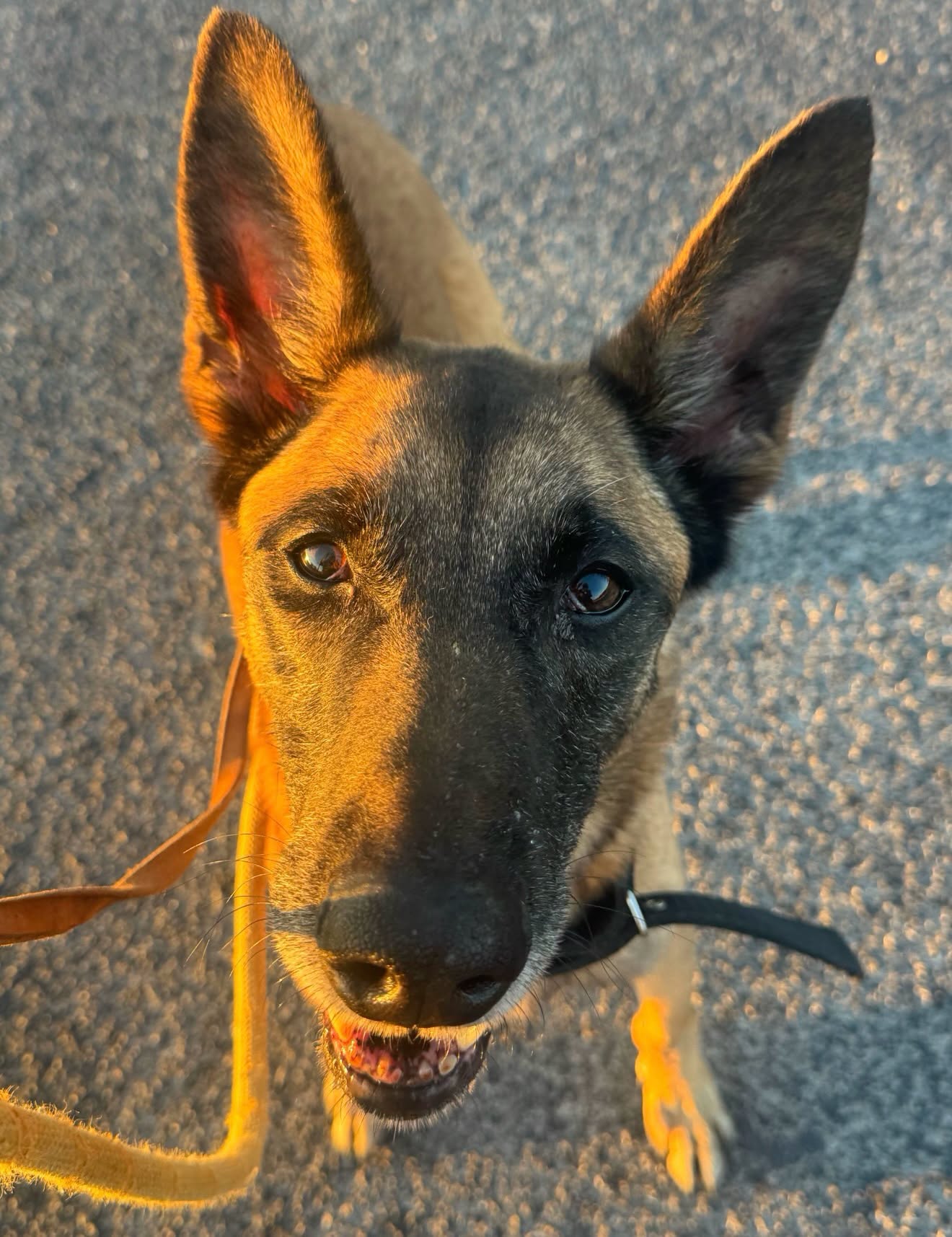
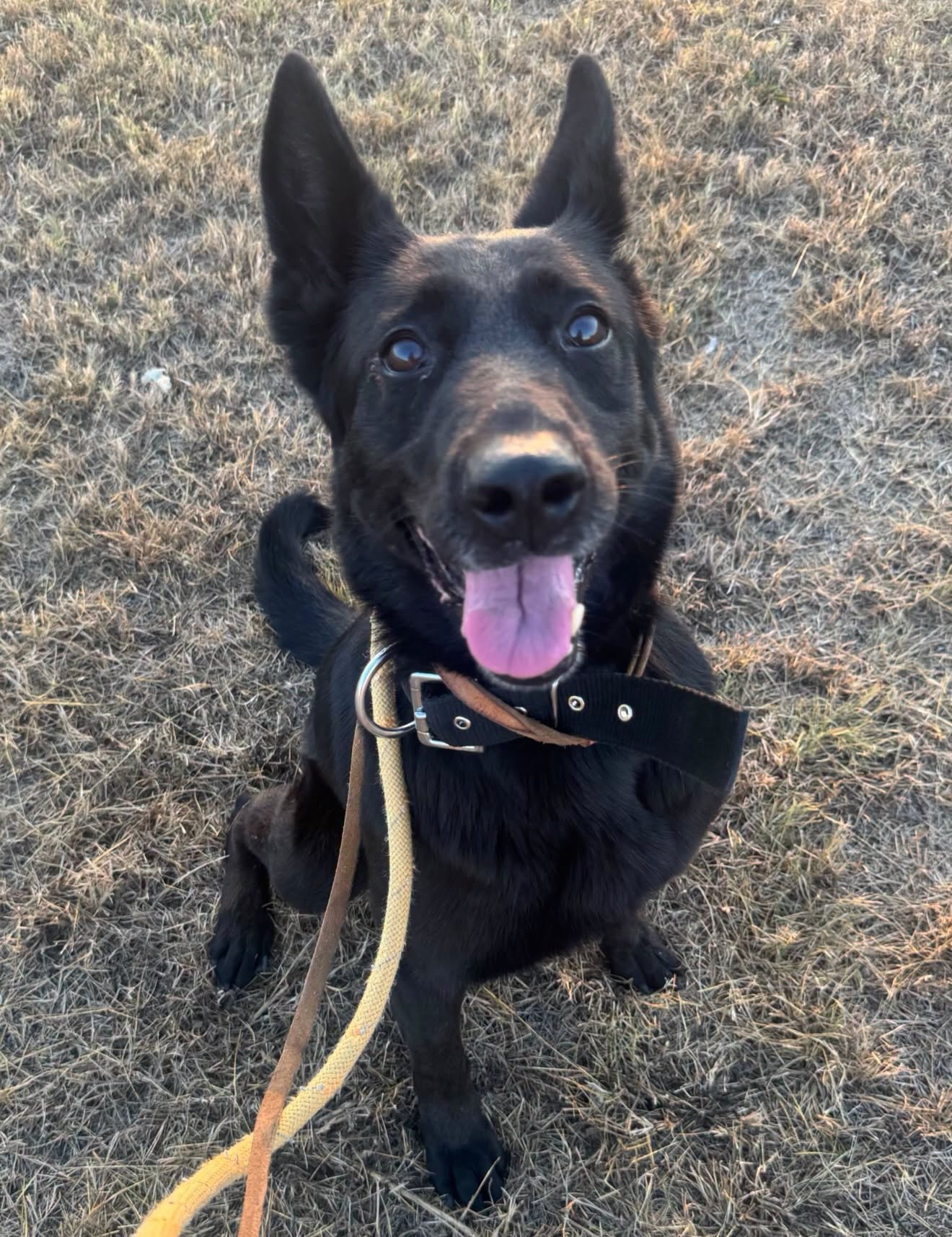
On October 8, we announced that nine more retired working dogs had arrived after a year and four months of delays and obstacles. Volunteers Mark and Terry traveled to Saudi Arabia to accompany them. Six arrived on Monday and three on Wednesday.
All nine were underweight. They needed thorough examinations and bloodwork. One had a concerning lump on a hind leg, another had a puncture wound on his shoulder, and several needed to become healthy enough for spay or neuter surgery. We began introducing dogs including Ajiri, Kira, Yago, and Maya as we learned more about them and addressed their needs.
Our later October updates also described dogs still waiting overseas. Their care and boarding remained our responsibility while travel was unresolved. The work continued even after the arrival photos had been shared.
Reuniting dogs with the handlers who knew them
In April, we helped reunite retired U.S. Navy Military Working Dog Bady A144 with his former handler, Brandon. They had worked together for two years, including a deployment to Kuwait from 2021 to 2022, and had been separated since 2022.
We arranged Bady’s transport from his final duty station in San Diego to Orlando, then drove him to Brandon in Jacksonville, Florida. After years apart, they could be together again.
In May, MWD Kamikaze went home to his handler, Javier. They had been partnered at NSA Bahrain and completed two deployments in the Middle East. Javier described how living alongside Kamikaze during deployments allowed him to know the dog beyond their working hours. He wanted to give his former partner a peaceful retirement together.
Funding delayed that reunion while we asked for help. Donors responded, and on May 14 we shared the news that Kamikaze was home with Javier.
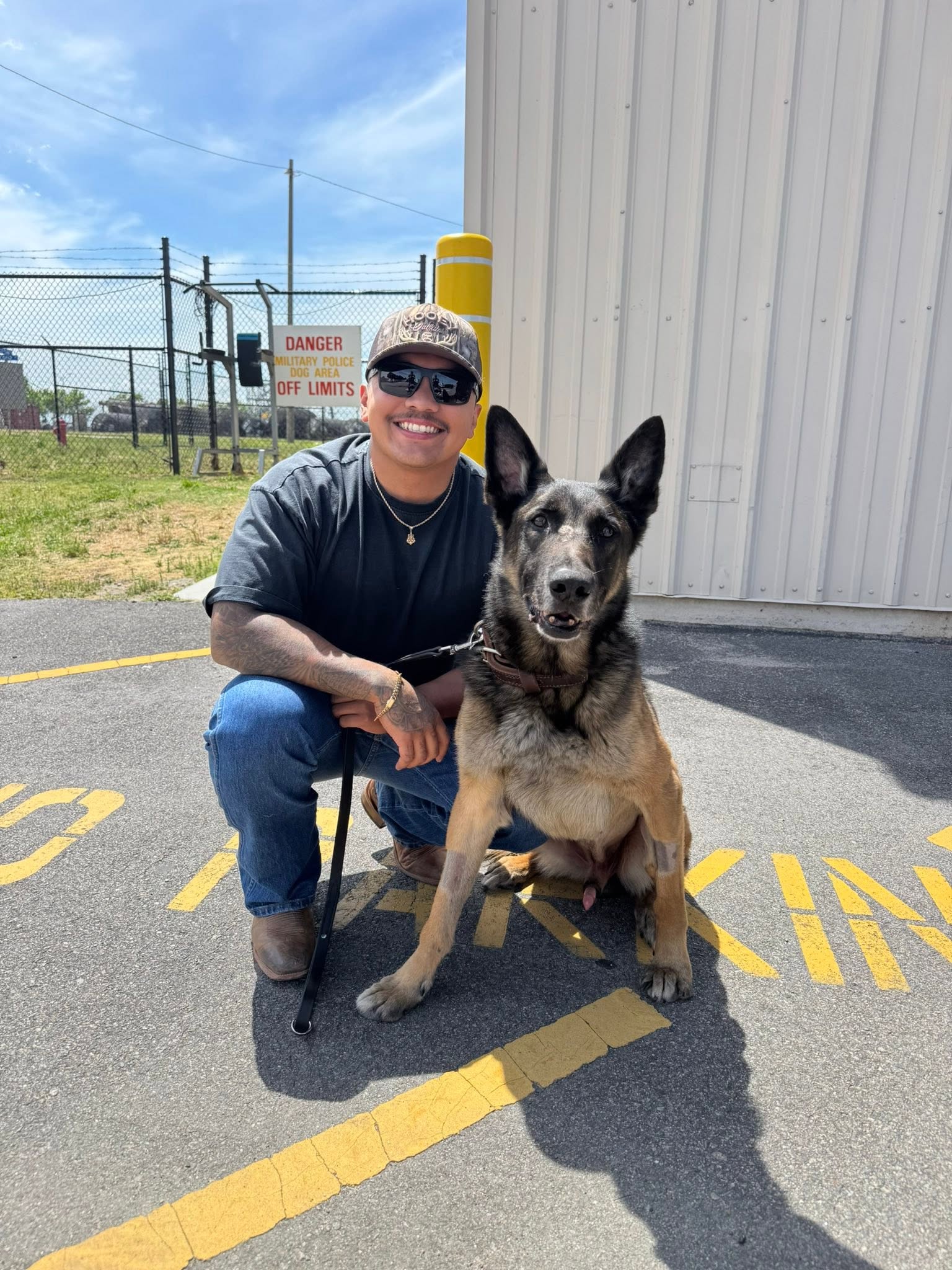
These reunions take planning, veterinary clearance, transportation, and money. They also require people who can keep track of the details and work with handlers while arrangements are made. Our team continued that work alongside the daily care of the dogs at our ranch.
We also spent time this year explaining why a dog cannot always retire with a former handler. A handler may still be serving, may face another assignment, or may have a home situation that cannot safely meet the dog’s needs. When a reunion is not possible, we work to find another suitable home. The decision has to account for the life that particular dog will have after service.
Finding homes for dogs who had been waiting
Leo was 13 years old when we shared his adoption appeal on August 31. He was the oldest dog from the Kuwait group described in that post, and he still enjoyed running, exploring, and playing fetch. He liked people and other dogs. We wanted him to spend his remaining years with a family.
People shared his story, and applications came in quickly. By September, we were sharing updates from his retirement in Virginia. An older dog who had waited a long time finally had a home.
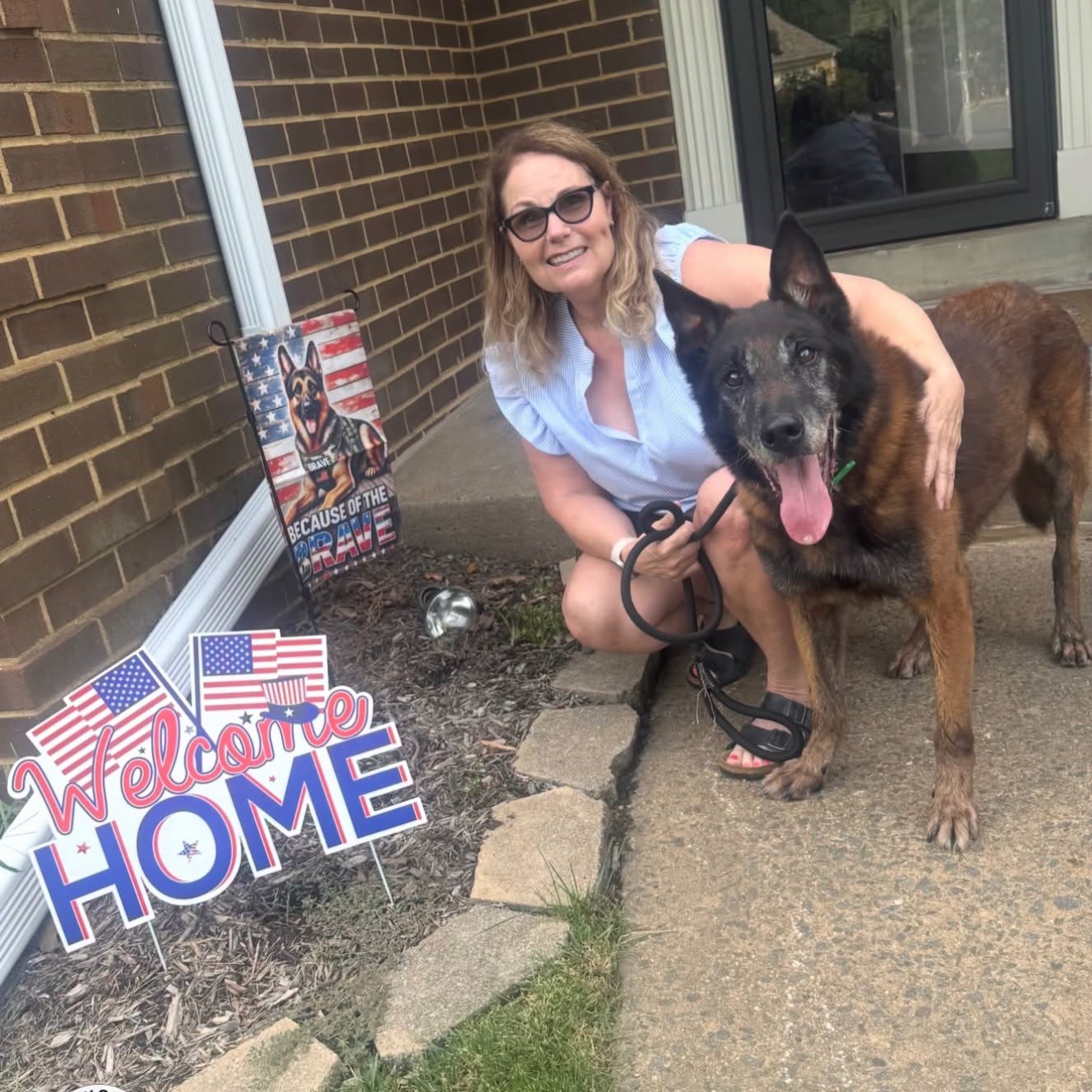
Kimi’s placement took longer. The nine-year-old retired explosives detection dog from Kuwait loved people but needed to be the only dog in her household. We posted about her repeatedly. A possible adoption in September was put on hold, and we continued looking.
Then, in our November 2 update, we shared that Kimi had been adopted, along with Diva, Bori, and Figo. Those placements also made room as newly arrived dogs needed our care.
CWD John, another Kuwait retiree, went to a family that understood he was nine and a half years old and had liver disease. In March, his adopters told us he was enjoying toys, balls, and time in the yard with their other dogs, including another Mission K9 Rescue alumnus, Luke. A later update described how gently John lived alongside the family’s cats.
Ficko went home on April 10. His adopter told us about his first night, his favorite Kong, and the quiet pleasure of having him nearby with the door open to the backyard. Tina’s adoption was celebrated in June. Rosti found a home after supporters responded to his appeal, and we announced Coski’s adoption in July. Later updates brought news of homes for Pepe and Berman, along with a happy report from Tiger’s family.
Those are some of the adoptions we shared publicly. Many more dogs went home in 2026 without a Facebook announcement. The work behind those placements was the same: reviewing applications, learning about the household, assessing compatibility, and helping a dog reach a family prepared for the commitment.
For some dogs, getting home also involved a long drive. In June, retired police K9 Radar traveled from Texas to California to join his adopter, Garrett. The trip took 26 hours. Radar apparently considered it necessary to keep three toys in his mouth at once during the ride.
We love getting those small details from a dog’s first days at home. They tell us how the dog is settling in and give our staff a chance to see the retirement they helped make possible.
$130,000 in veterinary care so far this year
Mission K9 Rescue has paid $130,000 in veterinary bills during 2026 so far. That care is a major part of what donors make possible, including for dogs whose treatment never becomes a public appeal.
Our posts this year have described dogs needing routine examinations and bloodwork, spay and neuter procedures, treatment or monitoring for kidney and liver problems, and evaluation of wounds and lumps. Some need specialist attention. Others need medication, continuing checks, and time to recover before we can consider placement.
The October arrivals from Kuwait showed how much work may remain after a transport succeeds. We knew they were underweight and could see some of their injuries. We still needed veterinary examinations and testing to understand what else was wrong and how to care for each dog.
Their food, housing, staffing, and transportation costs continued alongside those medical bills. With over 50 dogs in our care at any given time, appointments and treatment have to be coordinated with feeding, kennel care, exercise, and the attention each dog needs every day.
Our staff get to know the dogs during that time. They learn which ones enjoy other dogs, which need more space, which want to play, and which need a quieter routine. That knowledge helps us care for them at the ranch and make better decisions about their eventual homes.
Giving Myra the care she needed
In April, we said goodbye to CWD Myra, a retired working dog from Kuwait who had arrived the previous August and was diagnosed with degenerative myelopathy later in 2025.
Myra saw specialist doctors. With help from Amy at Blue Ridge Canine Safehouse, she learned to use a wheelchair. Our staff cared for her at the ranch, and she also spent time at Kristen’s home. During her time with us, she traveled, attended events in her wagon, and received attention from people who were happy to meet her.
As her condition progressed, Myra developed chronic urinary tract infections and could no longer do the things she once had. On April 2, Kristen shared the difficult decision to let her go peacefully.
We had eight months with Myra. Donors helped bring her from Kuwait and made her care possible. Our team loved her and worked to give her comfort and experiences she could enjoy for as long as her condition allowed.
Making retirement fit the dog
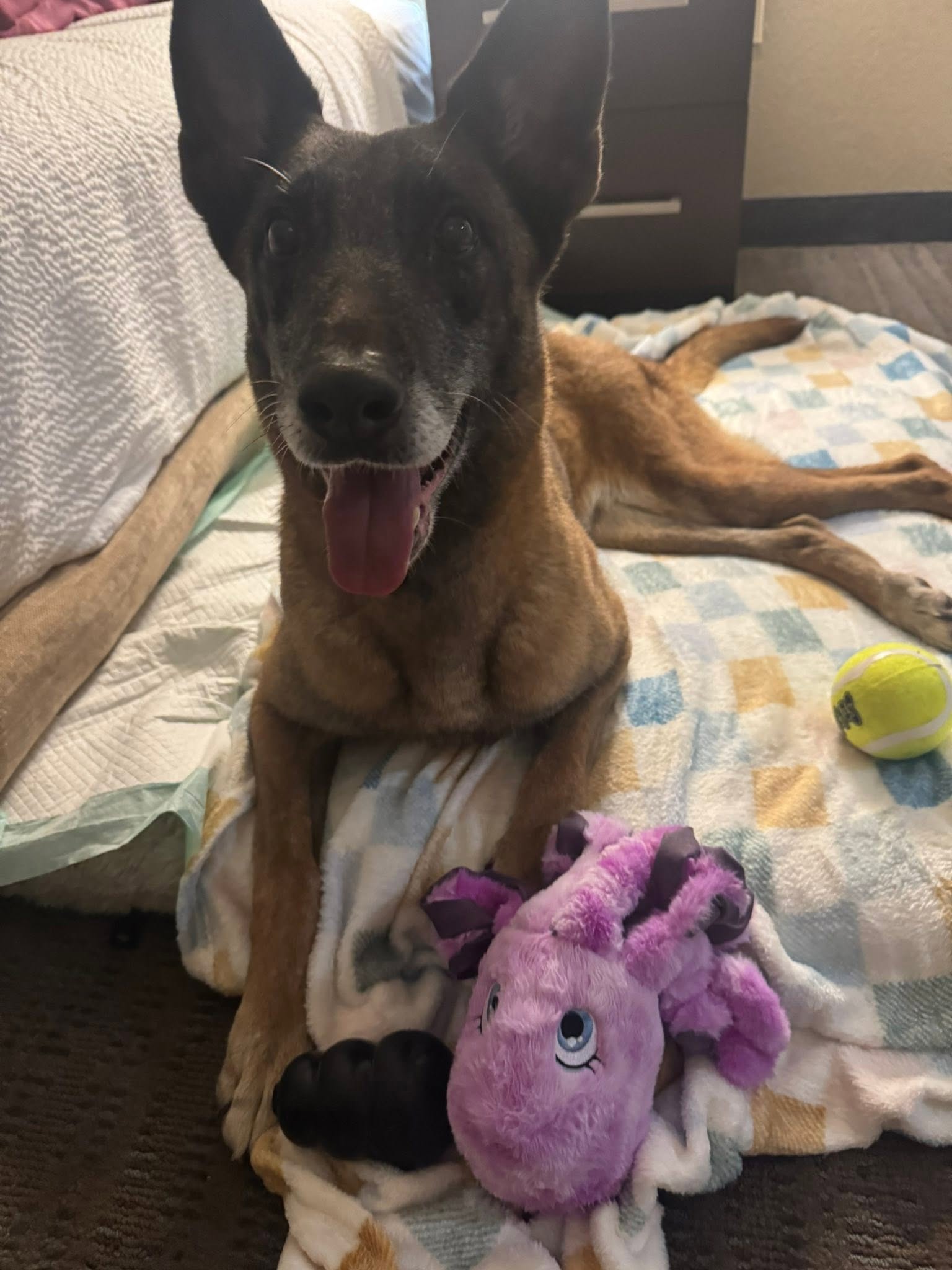
The dogs we introduced this year had very different backgrounds and needs. Alongside the Kuwait retirees, we shared stories of former military working dogs, police K9s, mine detection dogs from Bosnia, and dogs who had worked in Iraq and Afghanistan.
Some were outgoing with other animals. Some needed to be the only pet in a household. Some were seniors with medical conditions. Others still had the energy to spend a good part of the day exploring and playing fetch.
Our job is to understand those differences and make suitable placements. An application gives us information about an adopter’s experience, schedule, home, other pets, and ability to provide ongoing care. We review that information before arranging interviews and discussing possible matches.
We have been clear throughout the year that our retired dogs are being placed for retirement. They are not being adopted out to return to detection or protection work, and they are not trained or certified as service dogs for their adopters.
A family needs to want the dog as a companion and be willing to meet that dog’s needs. That may mean providing a quiet home, managing interactions with other animals, continuing medical care, or allowing a nervous dog time to settle. We would rather keep looking than place a dog in a situation that does not suit them.
How supporters kept the work going
There were difficult financial stretches in 2026. In May and June, we spoke openly about shortages that threatened our ability to maintain staffing and meet the costs of caring for the dogs. Supporters responded with donations and shared the appeals. In June, we reported that their help had given us additional operating time. By July, we were able to report improvement while continuing to ask for steady support.
The September Kuwait transport appeal was another example of people responding to a specific need. Reaching that $31,000 goal allowed us to proceed with travel arrangements while we continued raising money for the care the dogs would need here.
Support came in other forms, too. We received deliveries from our wish list. Families shared adoption appeals. Volunteers accompanied dogs on international journeys, and adopters made room in their homes for seniors and dogs with continuing medical needs.
We announced a partnership with Playology and its working-dog toys in March. In October, we shared our partnership with Unrivaled Pet and the change to its food at the ranch. These relationships are part of the practical support behind the dogs’ daily care.
We appreciate the people who give regularly, including those whose names never appear in a post. Recurring donations help us plan for the expenses that continue between urgent appeals. Food, medications, kennel care, and staff time are needed whether or not a particular dog’s story attracts attention online.
The work ahead
As of early November, we are still caring for over 50 dogs at any given time, helping dogs settle after transport, arranging veterinary care, and looking for suitable retirement homes. The recent adoptions are welcome news, and there are more dogs who need the same opportunity.
If you are considering adoption, please read our requirements and complete an application through our website. Tell us honestly about your household, experience, and the care you can provide so we can work toward a suitable match.
If you can help financially, a one-time or monthly donation will support the dogs’ veterinary care and the ongoing costs of rescue, transport, and retirement. You can also purchase supplies from our wish list or share an adoption post with someone who may be ready to give a retired working dog a home.
Donate to Mission K9 Rescue
Learn about adoption
Send supplies from our wish list
Read our 2025 recap for the previous year’s reunions, adoptions, and veterinary care.
