
In 2025, Mission K9 Rescue brought 54 dogs home. We had about 50 dogs in our care and spent $200,000 on veterinary care over the course of the year.
Those numbers include work that took months to complete. We arranged travel across countries, cared for dogs while their handlers were away, helped pay for cancer treatment, and found families willing to adopt dogs who needed patience, experience, or a home without other animals. Some dogs left us quickly. Others were with us for a long time before the right family came along.
Our Facebook page recorded many of those days: an arrival at the airport, a dog recognizing a former handler, an adoption after a long wait. Looking back through the year also brings us back to the difficult decisions, the medical appointments, and the times when we had more requests for help than we could accommodate.
Reuniting dogs with the people they knew
Early in the year, we worked to get two retired Air Force dogs to their former handlers in the United Kingdom. Kerry Y341 and Brian had served together from August 2020 to June 2021. Ivan Z004 and Charles had worked together for two years, and Charles was the only handler to deploy with Ivan.
By the time we began the reunion appeal, Kerry and Brian had been apart for two years. Ivan and Charles had been separated for two and a half. Kerry was staying in our care while the arrangements were made. We asked supporters to help raise $10,000 for the two reunions, and in February we were able to share that both dogs were back with their handlers.
Another reunion took us to Italy. Csoki B064, a retired Navy working dog, had been Julian’s first military working dog. They began working together in January 2021, certified in explosives detection and patrol work, and traveled to Los Angeles to support security for the United States Secret Service. Their time as a team ended in May 2022.
Nearly three years later, Julian was stationed in Italy and wanted Csoki home with him. We arranged Csoki’s travel from San Diego. In early April, Csoki reached Germany on his way to Italy. His flight had not been fully funded, but we moved ahead with the trip. On April 10, we shared the completed reunion.
The distances involved in these reunions often require several organizations to handle different parts of a trip. In June, KKliff Y465 came home to Lucas in Michigan. The Air Force, including the 8th Security Forces Squadron kennels in Kunsan, arranged his travel from Korea to the United States. Edward Bielick personally escorted him. Our team picked him up in the U.S. and brought him to Lucas.
KKliff also received support for retirement beyond the trip home. K9 Hurricane’s Heroes welcomed him into its program to cover his medical bills for life, and the United States War Dogs Association committed to providing his prescription medications for life.
In July, we helped reunite retired Navy dog Astra A119 with Tony, her first handler. They had deployed together in 2019 and spent five years apart. The Navy transported Astra from Greece to Norfolk, Virginia. We took responsibility for the final part of her trip to San Diego, where Tony, his family, and their dog Kelly welcomed her home.
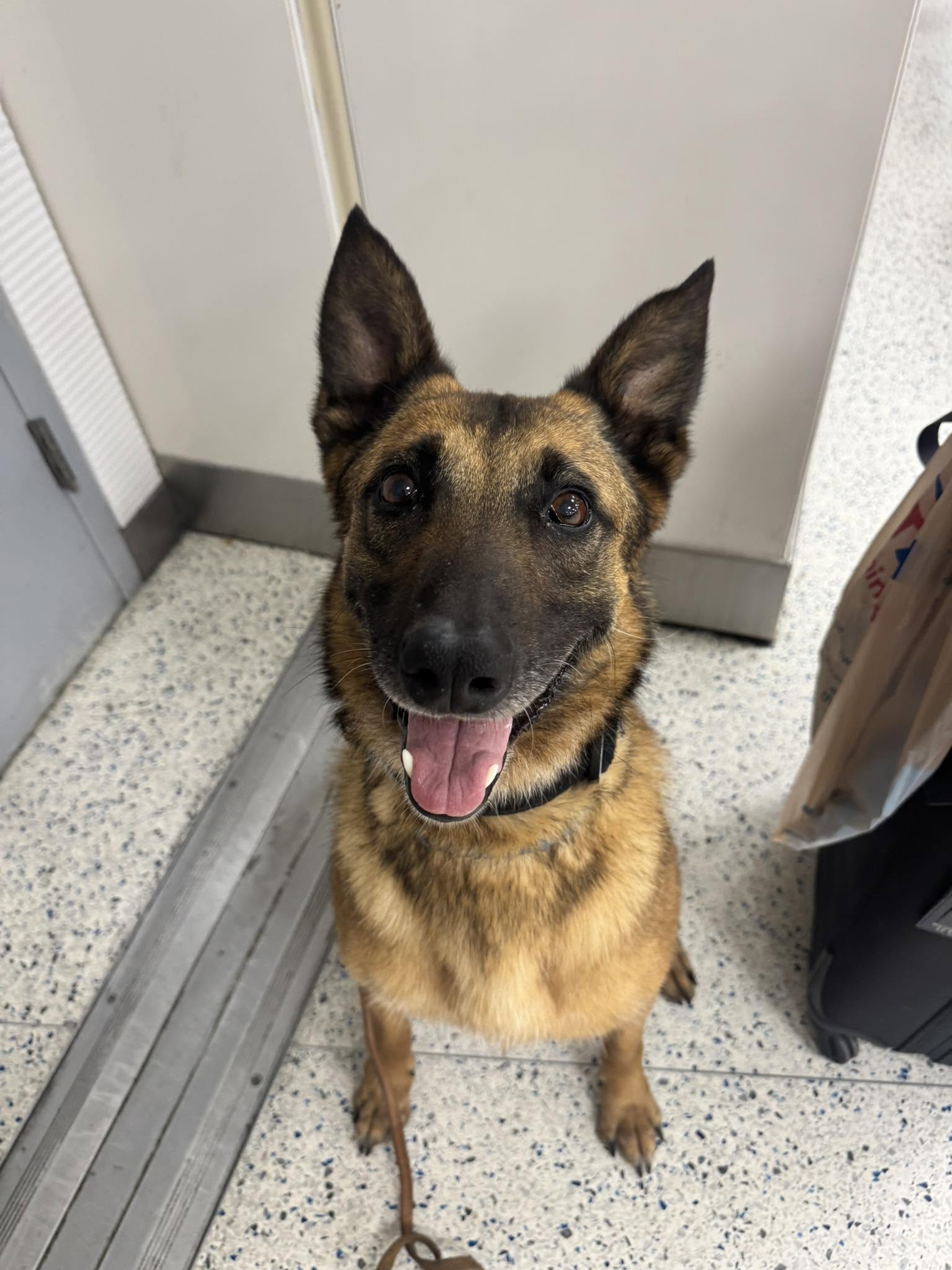
Other requests involved shorter trips or temporary care. We paid for retired military working dog Turbo’s ride home in January, with Ethan Marquis providing the transport. Tundra, a retired Navy multipurpose canine, stayed with us for six months while her handler was deployed. In October, she went home when that separation ended.
Nine dogs from Bosnia
In February, we received an urgent request involving nine detection dogs in Bosnia. A contractor we had worked with was ending operations after its funding was terminated, leaving the dogs’ futures uncertain.
We began a $35,000 appeal for their transportation, care, and boarding before adoption. A grant from Petco Love provided the first $5,000 toward the effort. By late April, all nine dogs had reached the United States and were receiving veterinary care.
Brick and Borealis were among them. Brick was a 10-year-old Belgian Malinois who had worked in mine detection. We introduced him as a gentle, laid-back dog ready for retirement. Borealis had also worked in mine detection and was one of the dogs facing the possibility of going to a shelter after the operation closed.
Bringing all nine home gave us time to assess their health and find suitable placements. Their arrival also added nine dogs to the daily work of caring for the dogs already with us. We continued paying for their care while they waited for homes.
Myra’s arrival and the care she needed
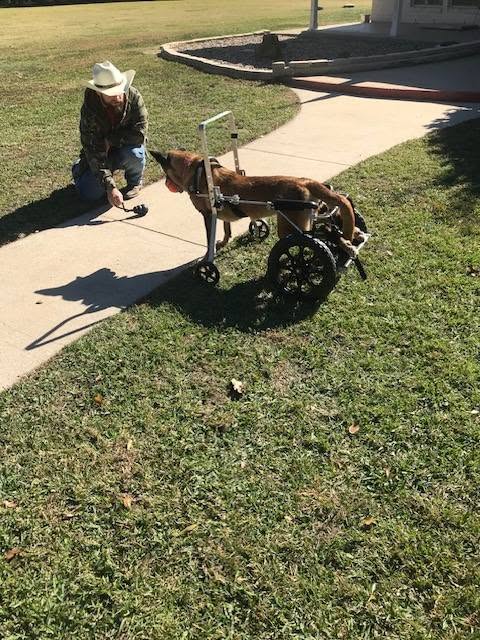
Myra came to us from Kuwait in August. She was a retired explosives detection dog who could no longer use her back legs. We hoped that further evaluation and rehabilitation in the United States might help her walk again.
Our team traveled from Houston to Washington, D.C., to meet her. Her arrival involved coordination with people overseas, preparations for her limited mobility, and appointments with a veterinary specialty team. A wheelchair donated for her was too large, so Amy from Blue Ridge Canine Safehouse and her husband, Jose, drove two hours to help. Amy brought a smaller chair that fit.
At Veterinary Referral Associates, Dr. Matt Brunke, Dr. Julie Corral, and the rehabilitation team evaluated Myra and helped establish a plan for her care. The initial assessment gave us reason to hope that rehabilitation could improve her mobility. Her wheelchair needed to fit properly, and we had exercises to work on with her before the trip to Texas.
Even the drive home had complications. A tire blowout in Knoxville left the team needing roadside assistance, transportation, a hotel, and a repair before continuing to Texas. Myra arrived at the ranch on Saturday, and her exercises began on Sunday.
By November, we had a different answer about her condition: Myra had been diagnosed with degenerative myelopathy. Our expectations for her recovery changed. We decided she would remain with Mission K9 for the rest of her life, with care focused on her comfort and mobility.
Myra learned to use her wheelchair and joined us at the annual golf tournament in California. Supporters who had helped bring her home could see the dog they were helping us care for. By December, we were still sharing her progress with the chair.
$200,000 in veterinary care
Across 2025, we spent $200,000 on veterinary care. The work included care for dogs living with us and assistance for retired working dogs already home with their handlers.
In May, we asked for help for K9 Ada, who had served a government agency for eight years. A growth on his paw had led to a partial amputation, and a biopsy confirmed osteosarcoma. His handler needed help with the cost of treatment. The chemotherapy estimate alone was $6,535. A later update that month confirmed that Ada was receiving chemotherapy with donors’ help.
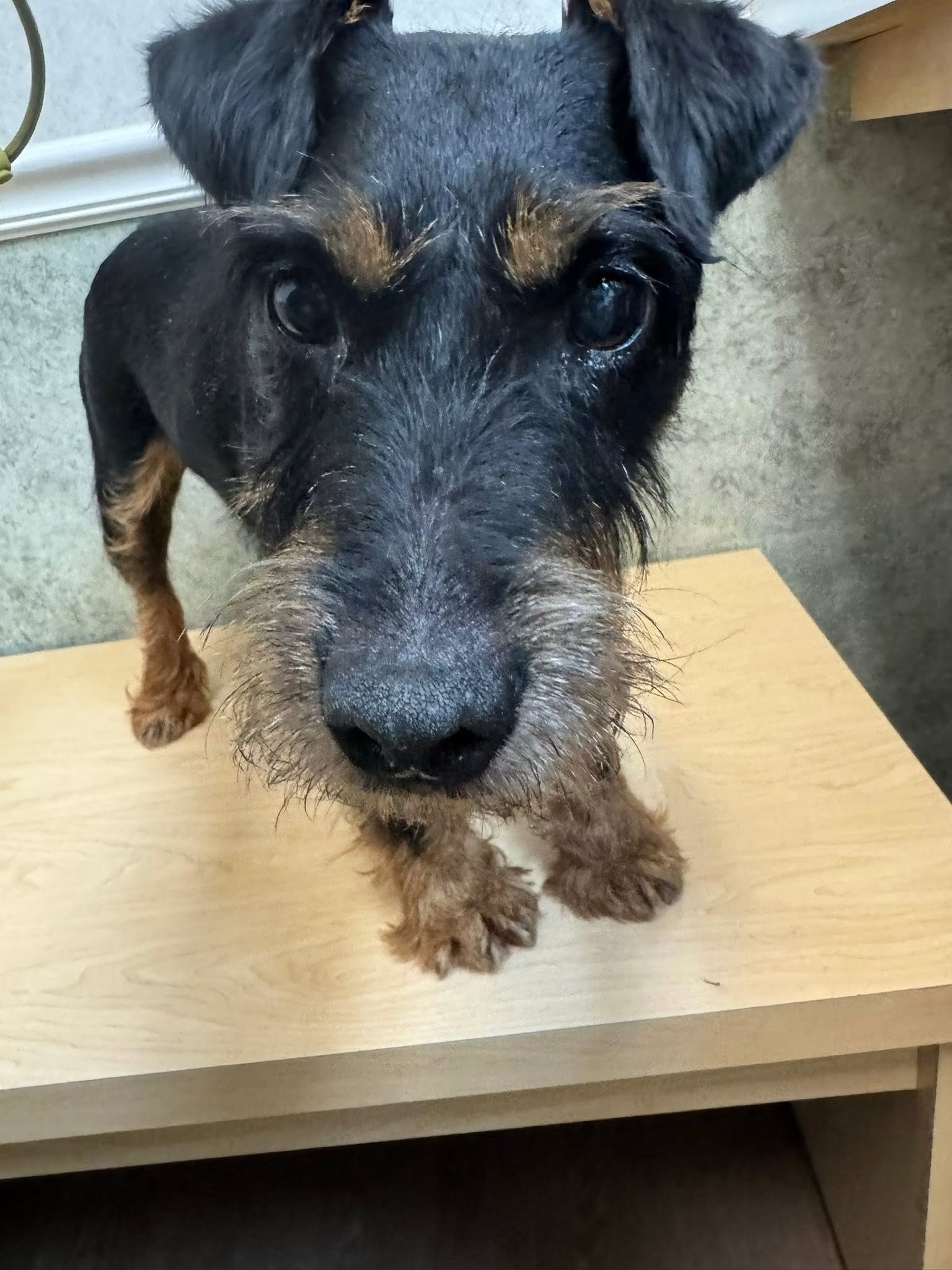
Late in the year, another dog’s behavior led us to seek a specialist’s assessment. Curko, whose formal name is Cvrco, was one of three retired explosives detection terriers who arrived from Kuwait before Thanksgiving. He was bumping into objects and seemed disoriented.
An ophthalmologist confirmed ocular degeneration in both eyes, with very little vision remaining. That finding helped explain what we were seeing and changed what we needed to look for in a home. Curko was gentle during his examination and loved his toys, but his limited sight made being around other dogs frightening for him. In December, we were seeking a quiet home without other animals.
The $200,000 veterinary total was a substantial part of the year’s work. It was separate from the transportation, staffing, food, and facility costs required to keep caring for dogs while they waited for homes.
Adoptions that were worth the wait
We began the year with good news about Lenox. A couple traveled from Illinois, met several of our dogs, and connected with him. He went home with them in January. In February, we shared that retired police dog Mike had been adopted and was enjoying the snow with his family.
For some dogs, the right placement meant keeping a friendship intact. Ice and Wheatley needed a home together. Ice was outgoing and social, while Wheatley did best in a calmer environment where he could get to know his people. We introduced them as a pair and continued looking for a family able to take both. In April, they were adopted together.
Moti’s wait was longer. When we featured her in January, she had already been with us for about five months. She was shy with new people and needed time to become comfortable. We were looking for a patient family that would allow her to settle in at her own pace. In August, we announced her adoption.
In December, we found a home for Layla, our longest resident. She arrived overwhelmed and reactive, and her behavior made finding a suitable home difficult. With time, patience, and structure, she became more comfortable and developed a friendship with Brandi, another dog in our care.
Layla and Brandi went to their new home together. Their adopters made room for both dogs after Layla had spent so long waiting.
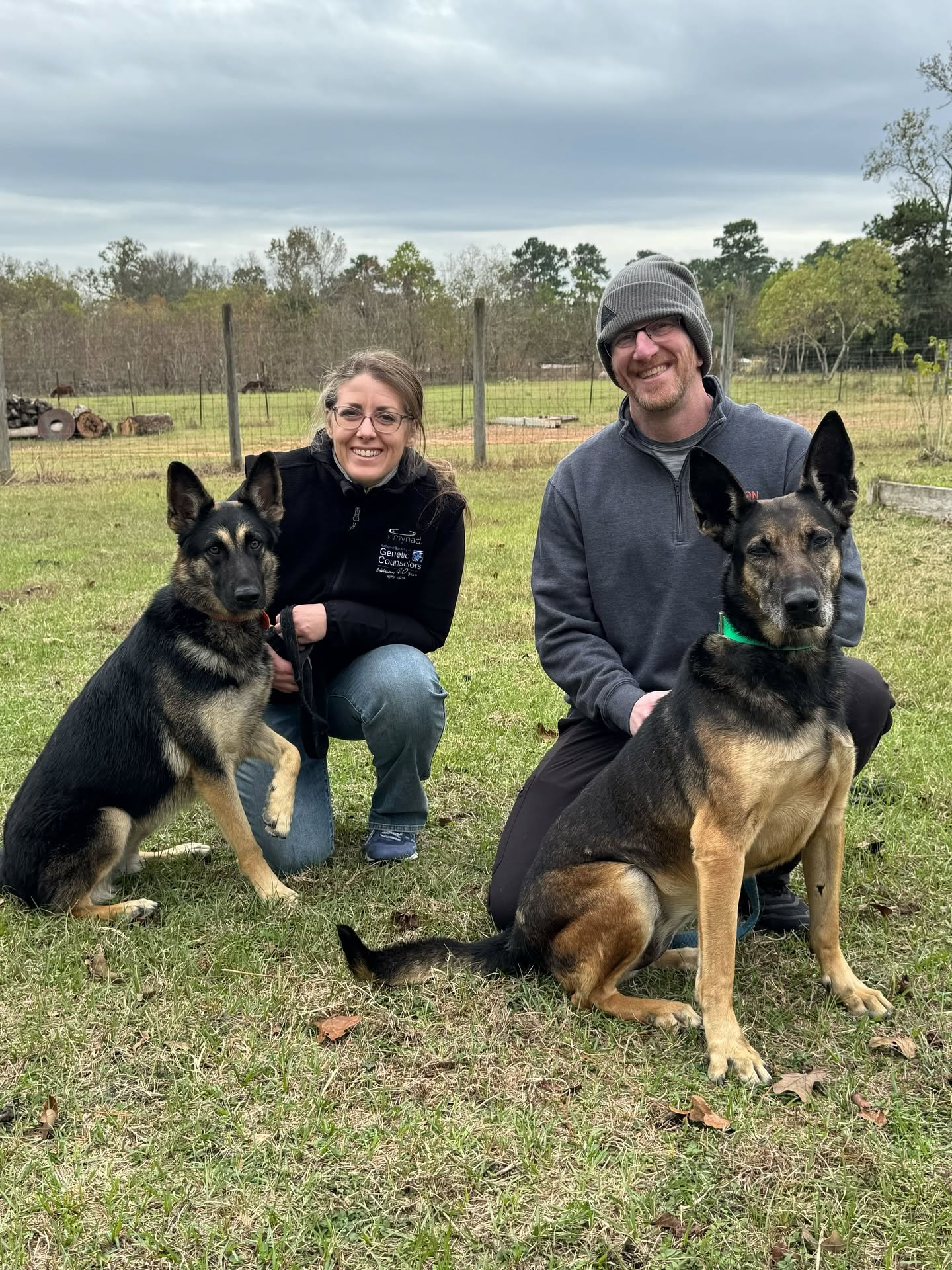
There were other departures throughout the year. Leo was adopted in June and headed to Colorado. Gracia, who had worked in explosives detection in Afghanistan, was enjoying retirement in California by the time we shared her December update. Mex went home with a couple ready for a large, energetic dog. Clea, one of the first dogs in the Kuwait transport effort, left with her adopter, Kathy, in December. On Christmas Day, we shared Luna opening presents with her new family.
Our adoption process considered the applicant’s home, schedule, experience, and existing animals alongside the needs of each dog. Ice and Wheatley needed to stay together. Moti needed patience. Curko needed a household suited to his limited vision. Matching those needs took time, and we continued caring for the dogs throughout that process.
Caring for about 50 dogs
With about 50 dogs in our care, the ranch had ongoing responsibilities regardless of how many dogs arrived or were adopted in a particular week. Dogs needed food, clean living spaces, attention, and appointments. Staff needed time to learn their behavior and help them prepare for life in a home.
There were also limits to what we could take on. In June, we reported that we had turned away nine working dogs the previous month because the kennels were full and staff were stretched thin. That was a painful part of the year.
Additional space would have helped, but space alone would not have covered their care. Taking in more dogs also required enough staff, veterinary funding, and operating support to look after them properly. The dogs already with us depended on those resources every day.
The people who helped make the work possible
We worked with handlers, military personnel, veterinary teams, transporters, adopters, volunteers, donors, and other rescue organizations throughout 2025. Their contributions were often specific: escorting a dog on an international flight, finding a wheelchair that fit, covering prescriptions, or making room for two dogs instead of one.
At the start of the year, we also helped with an urgent request involving a mother dog, Beverly, and her ten puppies. We provided boarding and transportation as part of a trip already being made for working dogs. Puppy Rescue Mission helped with veterinary care, and Blue Ridge Canine Safehouse took responsibility for their care and adoption placement after they reached Virginia in February.
Supporters found several ways to help fund our work. Voting and donations through MyGivingCircle resulted in a $1,750 grant in January. In September, supporter Heather Valente helped us open an online store by providing order fulfillment.
The seventh annual Retired Military Working Dogs Golf Tournament brought together golfers, donors, and volunteers in November. Mike Pagano and Teemu Selanne hosted the event, with support from Mission K9 Rescue and Warrior Dog Foundation volunteers. Zak Brown auctioned a racing suit for $8,000, and eBay matched that amount, bringing the total from that suit to $16,000.
We are grateful to the people who organized these efforts and to those who supported the dogs throughout the year. Reliable contributions help us plan for the care that continues between a transport announcement and an adoption photograph.
Work that continued beyond December
As 2025 ended, a major effort to bring retired drug and explosives detection dogs home from Kuwait was still underway. We had announced plans for 49 dogs, and the first arrivals were beginning their lives with us. Clea’s December adoption and Curko’s medical evaluation were part of that work.
The full transport effort was not completed in 2025. More travel arrangements, fundraising, and care remained ahead. We carried those responsibilities into 2026 alongside the daily needs of the dogs already at the ranch.
If you would like to help with that continuing work, you can donate at our donation page. To apply to adopt a retired working dog, visit our adoption information and application page. We review applications with each dog’s needs in mind, including dogs who have been waiting a long time for a suitable home.
